
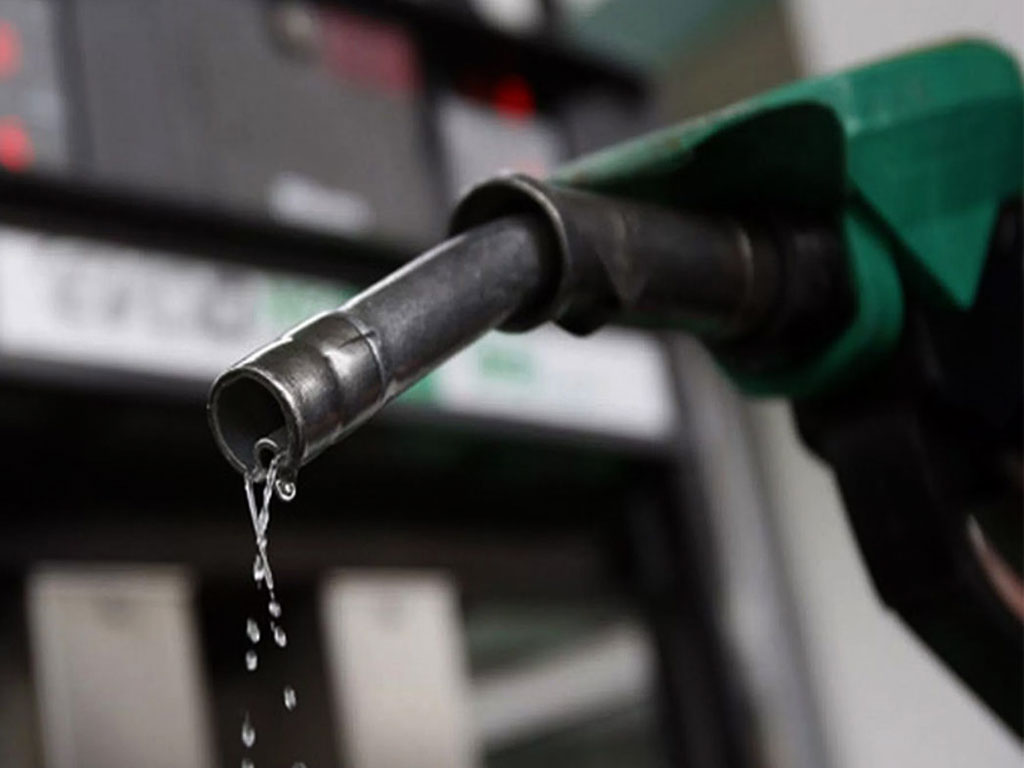
In a move reminiscent of previous governments, the PTI administration decided not to pass on the entire reduction in the international price of petroleum products to domestic consumers by adjusting the tax rates on different POL products, as it considered appropriate. The reason: to attempt to contain the estimated shortfall of around 173 billion rupees in the revenue projected by Finance Minister Asad Umar in the Finance Supplementary Amendment Bill 2018 during the first half of the current year - a shortfall that was projected by Business Recorder on the basis of the government's measures not being implementable, as had been in the case in the past, without massive tax reforms. Sales tax adjustment on petroleum and products, an indirect tax because its incidence on the poor is relatively higher than on the rich, with huge daily sales implies adjustment in revenue collection from day one. In other words, sales tax on POL products is a tax that is easily collected though it does erode the disposable income of the poor.
Oil and Gas Regulatory Authority's (Ogra's) recommended price adjustment for January premised on standard 17 percent general sales tax (GST) which was notified by the federal government; however the Centre then raised the petroleum levy on petrol from 10 rupees to 14 (a 42 percent rise) and on high speed diesel from 8 rupees to 18 rupees (126 percent rise). The Ogra's recommendation compared to the notified rates for January are as follows: (i) petrol of 9.50 rupee per litre (10 percent reduction) while the government agreed to a decrease of 4.86 rupee per litre; and (ii) high speed diesel by 15 rupees per litre (13.5 percent reduction) with the government notifying a decrease of only Rs 4.26 per litre. The main revenue generators for the government are petrol and high speed diesel with the former in use by the rich with fuel guzzling cars, however, the lower middle to middle income earners who own motorbikes too use petrol; high speed diesel affects public transport sector notably buses and lorries thereby adversely affecting price stability.
Those who may accuse the government of following the same policy in terms of meeting a yawning deficit as previous governments that Pakistan Tehreek-e-Insaf (PTI) criticised bitterly when not in power, must acknowledge that without this adjustment in rates, the budget deficit would have risen dramatically which is a highly inflationary policy whose repercussions on the disposable income of the poor would have been greater if not at par with tax adjustment on POL products. Additionally, the incumbent government is grappling with a rising circular debt - it is up to 1.362 trillion rupees - which reflects continuing liquidity issues of the energy sector whose resolution requires the government to raise tariffs and/or make direct unbudgeted injections which again impact on the general price level. In other words, Business Recorder fully supports the government's decision not to pass on the entire decrease in the international price of oil onto domestic consumers.
Independent economists rightly express serious concerns at the policies of the government not being in synch; for example, while it has decided to reduce the rates applicable to industry that requires a subsidy, with the objective of making our exports competitive in the international marketplace, yet at the same time, it has not passed on the decline in the domestic oil prices which is a major input to industrial output and which, in turn, may make our exports uncompetitive. There is therefore an urgent need for the government to look at its policies in a holistic manner.